Sunday, 20 July 2014

George Ezra - Waiting on Voyage (2014)


Waiting on Voyage is the debut album by twenty-one year old British singer/songwriter George Ezra, yet another in a long list of twenty-something year olds breaking through in this very in vogue acoustic-folk style. However, at the same time, this guy is quite different stylistically from the likes of Ed Sheeran and Jake Bugg largely thanks to his very distinctive singing voice.

George Ezra’s voice when you hear for the first time is a voice that you do not immediately think belongs to a twenty-one year old, and sounds more so like someone in their sixties, someone with years of singing behind them. With this in mind, I must confess that I don’t think I have heard a voice quite like this one on someone in the early stages of their career, and Ezra certainly has a voice way beyond his years. Sound-wise I would describe his voice as being a cross between Eddie Vedder and someone in the ilk of Robert Johnson, or other delta blues musicians, with its warm bluesy tone and deepness. It is this unique and very mature voice which more than anything ensures that Ezra’s music stands out within what is quite a saturated singer-songwriter market, and after hearing a couple of singles, made his debut album Waiting on Voyage that much more intriguing to find out if the songs themselves could match up to the singer.

Ezra’s music is very much acoustic-based (he uses a semi-acoustic guitar and occasionally a resonator) and contains a blend of folk, skiffle, blues, and pop. Yes the song-writing at this stage is quite simplistic and the music definitely owes a lot to Ezra’s unique voice and the overall sense of melody it portrays, but often when you have such a distinct sound in your armoury whether it be a distinctive guitar, or singing style, simplicity can work best, with complex arrangements or experimental sounds only working to distract the listener. With this in mind, at times the music on here does suffer a bit from over-production, with whoever is producing trying to give some of the tracks a modern pop kick to them, something which is totally unnecessary. Some of the tracks could do without the synths, sequencing and electronic backing as they do not add anything, and quite frankly do not work well with the style of music Ezra is playing.

So what tracks stand out on the album? Well the album kicks off with a great opener “Blame It on Me”, which contains some skiffle influences in the guitar playing and also has a great sing-a-long chorus, something most of the songs on here contain. “Budapest” is one of the singles on the album which began to get Ezra noticed in the music world, and is more a mellower folk track with a slight calypso feel to it especially in the vocals and guitar. It is on tracks like this one that you really get to hear the unique quality of Ezra’s voice and his very distinctive deep tone. “Cassy O” is the second single, and although lyrically it is a bit throw-a-way, it has a very nice country shuffle to it and does a good job in highlighting Ezra’s efficient rhythm guitar playing, a style that is quite experimental when it comes to different strum patterns. “Did You Hear the Rain” musically is perhaps the most interesting track on the record and begins with a very haunting delta-blues like moan, before Ezra begins singing a cappella in a deep bluesy voice which sounds as if it could have come straight from the cotton fields in the Southern states of America, it is truly something. The track then transitions into a bit of an alt-folk track full of mood and feeling in what is definitely one of the album highlights. “Drawing Board”, “Stand by Your Gun” and “Barcelona” are also other noteworthy tracks on what is a very varied album stylistically and one which keeps the listener guessing as to what will come next, with Ezra bouncing from style to style across each track. There are a few dud tracks on the record, namely “Leaving It Up to You”, “Breakaway” and “Over the Creek”, but on the whole these are the exception to the rule and do not really diminish the overall quality of the album.


Waiting on Voyage is a very interesting and eclectic first up effort from George Ezra. There are a lot of things going on here musically which stand out and the fact he is willing to move from style to style across the album is quite daring for a debut. At times the production does get a bit too much and sees some of the songs lose their focus a bit, with the production team going dangerously down the pop for pop sake road which tends to be employed a lot in this day and age. Despite this, there is definitely plenty to work with here and if anything his quite remarkable voice will ensure he has a future in the industry. It will be very interesting to see where he goes from here musically, especially as he begins to mature as a song-writer, while as the voice itself, maturity-wise is already there. 

A- 

- Sam 

Sunday, 13 July 2014

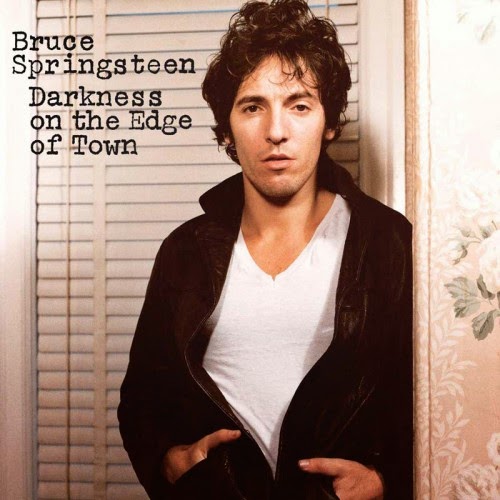
Bruce Springsteen - Darkness on the Edge of Town (1978)


Released in 1978, Darkness on the Edge of Town was Bruce Springsteen’s fourth studio album, and the first release following his breakthrough album Born to Run, an album that took him to levels of superstardom to the point that many critics declared him as being the savour of rock. However, Springsteen suffered somewhat from a three gap between releases as he was involved in a bitter dispute with his former manager for the rights and control of his music. This impacted on his new found momentum following Born to Run, meaning that “Darkness” in many ways was a make or break album for Springsteen and a record where he needed to prove that he wasn’t just a flash in the pan one album wonder.

Musically, Darkness is quite a step away from Born to Run and is not as full on in terms of its overall production and sound. Gone is the wall of sound style that was a constant on his previous album and in its place comes a sense of maturity I guess, musically, with Springsteen spending more time in the studio crafting songs and developing ideas instead of following rigid musical arrangements. Just one of the musical casualties from the Born to Run sound aside from the layered production, was the heavy sax presence of Clarence Clemons who definitely takes a backseat on this album, while the band as a whole are much tighter on here. This comes as no surprise as Springsteen himself has said subsequently how he wanted a leaner and less grand affair than Born to Run. The song-writing is also quite a departure from Born to Run and thematically looks more at Springsteen’s life growing up in small town America, while taking influence from his managerial struggles of the time.  Many of the song titles reflect this sense of tension, while also portraying a sense of doom descending, with “Badlands”, “Streets of Fire” and “Darkness on the Edge of Town” being just some examples of this. Springsteen was also so intent on keeping the overall thematic feel of the album and its essence intact to the point that many of the 70 odd songs he wrote and recorded around this time were left off the album as they did not fit in with the overall concept. Many of these songs would subsequently appear on future releases instead.

Darkness on the Edge of Town is full of standout tracks, starting with the anthemic opener “Badlands”, one of Springsteen’s most loved tracks and what he traditionally plays to start his concerts. Out of all the tracks on the album this one probably resembles the Born to Run sound the most with its chiming piano, pounding drums and a rare sax solo. The album then takes a slightly different turn on the following track “Adam Raised a Cain”, an aggressive raw guitar track which also has a punk attitude about it when compared with what was going on elsewhere musically at the time. This track is then followed by the quite emotional rock ballad “Something in the Night”, a beautiful song that begins with some soaring moans from Springsteen himself before transitioning into quite a powerful and reflective song. “The Promise Land” is a harmonica laden rock number that also has a thunderous sing-a-long chorus and a brilliant sax solo, while “Prove It All Night” is quite an interesting song musically, containing different things that jump out at you throughout like the slightly Asian sounding piano opening and the tracks subtle overall rock and roll dance feel. Finally, album closer “Darkness on the Edge of Town” pretty much sums up the album both lyrically and musically, as well as capturing the essence of its message. All of the musical elements seen on the album are pretty much at play on this song, while it also contains somewhat of a gospel feel in the vocals. A great track to end what is on the whole a great sounding album.


Darkness on the Edge of Town remains one of Springsteen’s most highly regarded albums and is even rated as high as 150 on Rolling Stone magazines top 500 albums of all-time list. Its enduring legacy is also seen through how it was re-issued as part of a box set titled “The Promise” in 2010, a very expansive and expensive set that also included an album made up some of the tracks left off the original album that had not been released, as well as an accompanying documentary which gave a very insightful look into the making of the album and Springsteen’s methods in the studio. In conclusion then, I would say that “Darkness” is a very honest record with a more focussed sound than seen on other Springsteen releases. It may lack the stylistic diversity of some of his other more seminal albums, but this is made up for by some solid song-writing as well as some interesting musical moments. This album definitely features in his top five and in many respects is an underrated late-70s rock classic. 

A- 

Sam 

Wednesday, 2 July 2014

Humble Pie - Smokin' (1972)


Smokin’ was the fifth studio album released by British boogie rock band Humble Pie, the super-group that was created by ex-Small Faces frontman Steve Marriot and 70s guitar god Peter Frampton. Released in 1972, Smokin’ would fit right at home within the hard rock boom that was storming the UK at the time with acts such as Led Zep, Sabbath and Deep Purple strutting their stuff. However the UK audiences largely turned their noses up at Humble Pie, and it would be in America where the album’s release would catapult the band into the stadium rock scene of the mid-70s, with a highly respectable number six placing on the billboard charts.

From a musical perspective, Smokin’ is quite a departure from the bands earlier material which largely blended folk, country and rock influences. Here the band lay down a heavier sound that incorporated boogie rock and hard blues rock, with some soul and country thrown in for good measure. This album is full on sound-wise and one does get the feeling when listening to it that you could wear earmuffs and still hear enough of the music, it is that loud. The components which make up The Pie’s sound on this album include the heavy blues guitar of Marriot and lead guitarist Clem Clemson (Peter Frampton had left the band by this point), the whaling soulful vocals and Hammond organ playing of Marriott himself, vocals which again showed why he was one of the best rock singers to come out of Britain, and finally a solid rhythm section comprising one of rock’s underrated bass players Greg Ridley and drummer John Shirley, who work so well together in giving the heavier tracks a steady backbeat . Notably there are also key contributions from Stephen Stills on backing vocals and Hammond organ, and Alexis Korner on vocals and guitar.

As for the tracks themselves, well the album kicks off with a sizzling boogie rock barnstormer called “Hot ‘n’ Nasty”. Here the organ sizzles, the rhythm section pounds, while Marriott lets it all go vocally on a track which certainly has plenty of high octane and sets the scene for the rest of the album, laying a significant marker down in the process. This track is followed by “The Fixer”, a standard heavy blues rock track with plenty of riffage, big vocals and pounding drums, a sound that was pretty much in line with the other heavy bands of the day. “You’re So Good for Me” is a beautiful soul ballad complete with gospel sounding female backing vocals and represents the most tender moment on the album showing that the band did have a softer side to them as well. This has to be one of The Pie’s best songs and is a definite album standout. “C’mon Everybody” is an Eddie Cochran cover and represents another blues rock style track, all be it an improvement on “The Fixer” which lacked the boogie feel and energy of this track. “Old Time Feelin” is an acoustic blues track that has a bar room jam vibe to it with its rolling piano, harmonica and overall laid back feel. This track is also notable for not featuring Steve Marriot on vocals, with Greg Ridley and guest Alexis Korner lending a more than adequate hand on vocal duties. The album then comes to a storming end with heavy rocker “30 Days in the Hole”, a cover of Junior Walker’s “Road Runner” titled “Road Runners G Jam”, a track which literally takes jamming to a whole new level and literally smokes as a track, and finally album closer “Sweet Peace and Time”, a brilliant heavy rock track that encapsulates everything about this album, while going a long way in proving that this band was one of the loudest and heaviest of their day.


Humble Pie carved quite a successful career for themselves in the States but never really took off in the UK, something which in itself is surprising as I feel their sound was where Marriot was wanting to take the Small Faces down before they separated. My gut feel is that they were passed by in an over-subscribed hard rock market in the UK, with their being just too many bands of a similar ilk. Despite this there can be no doubt that Humble Pie released some great albums like this one and benefited strongly from having the likes of Marriott and Frampton at the helm. In conclusion I would definitely say that Smokin’ is a highly underrated hard rock album and an album that would go on to influence hard rock and heavy metal bands in the future. It had everything you want from a hard rock album and helped to establish Steve Marriott’s legacy as one of Britain’s greatest rock singers, something I which his contemporaries would wholeheartedly go along with. 

A- 

Sam 

Sunday, 22 June 2014

Rodriguez - Coming from Reality (1971)


Coming from Reality is the 1971 second and till this point last album by Detroit singer-songwriter Rodriguez. Rodriguez and his music came to wider public prominence with the 2012 academy award winning documentary “Searching for Sugar Man”, with his career having largely been till that point an underground word of mouth sort of affair, at least in Anglo-Saxon countries. The story of Rodriguez career is fascinating to say the least and the documentary film does a good job in bringing it to light for a wider audience, which is why I will not touch on it here and instead will focus on the music and what is a truly great second album. An album which often gets overlooked in favour of its more well-known predecessor Cold Fact.

Coming from Reality was in some ways a transformational album for Rodriguez after his lo-fi acoustic folk debut. Here he placed more attention on the production of the tracks going for a slicker sound, while the songs themselves also have more of an electric feel, although his standard acoustic folk style is still prominent across the album. This might have been down to a desire from his record label to make a more commercially sounding album, as well as the presence during the recordings of acclaimed British guitarist Chris Spedding who helps out on electric guitar and production. Musically, Rodriguez also branches out more into other styles on this album, with spoken word, garage, funk, R&B, jazz, Latin and classical all appearing in various forms and guises across the album, making this set of tracks a highly eclectic take on the singer-songwriter/folk style which Rodriguez successfully went for on his debut. Lyrically, the songs themselves continue to focus largely on social themes, something which was ever-present on Cold Fact, with their social imagery and anti-establishment inklings settling in the mind of the listener right from the get go. Lines such as “I’ve played faggot bars, hooker bars, motorcycle funerals” are hard for the listener to ignore as they are so vivid and hard hitting, especially when they take the form of a spoken word track, in this instance “A Disgusting Song”. Through his words, Rodriguez is masterful in capturing the essence and mood of his own experiences living in Detroit, a city which was then experiencing the beginnings of its now well publicised collapse and downward spiral.

In terms of what songs standout, well there are many and it is impossible to narrow the list down as there is hardly a dud on here. “Climb Up on My Music” is a brilliant opener and sets the tone for the rest of the record. Here you are immediately alerted to some of the changes from the first record, especially this tracks electric feel and Santana-like sound with its shuffling guitar, electric piano and subtle jazz influences. “I Think of You” is a beautiful folk ballad that features some delicate acoustic finger-picking in the mould of Jose Feliciano and a very soulful vocal. “To Whom It May Concern” is another stunning track that opens with a great piano refrain before transforming into a kind of LA singer-songwriter jam. I am sure if Rodriguez had been involved in that scene he would have taken it by storm. “Halfway Up the Stairs” like many of the tracks on this album employs electric piano and also strings, with Rodriguez paying more attention in trying to achieve more of a pop sound, something he manages with great success. Finally, we are fortunate that the re-release of this album contains three outstanding bonus tracks which should have made the final cut for the original album given their quality. The first of these is the fantastic “Street Boy”, a sing-a-long sort of affair which also features a well-constructed acoustic solo. Aside from his vocals and lyrics, Rodriguez guitar playing is an album highlight and probably doesn’t get the attention it deserves especially given the quality of the little solos he puts in like the one on this track. This bonus track is accompanied by the road tripping “Can’t Get Away”, and finally the acoustic summer track “I’ll Slip Away”.


Although Rodriguez debut album was fantastic, and in most people’s eyes represents the true essence of his song writing and music, I feel that Coming from Reality trumps that album. Musically the songs on here are more melodic with a stronger focus on the production of the songs and how they are presented to the listener, something I believe improves the material. Rodriguez still retains the level of song-writing of his debut and the folk sound he is known for is still there in spades. However the thing I love about this album is how he branches out further musically, especially in his exploration of other styles and sounds that all in all come together so well on here. This album is an early-70s classic and I guess symbolises what might have been had Rodriguez continued to record. My parting message is a request for those of you who haven’t seen the film “Searching for Sugar Man” about this man’s musical journey to see it. As apart from the brilliant music on display here, this man’s story is truly one of the more fascinating stories in the history of twentieth century music.

A

- Sam 

Monday, 16 June 2014

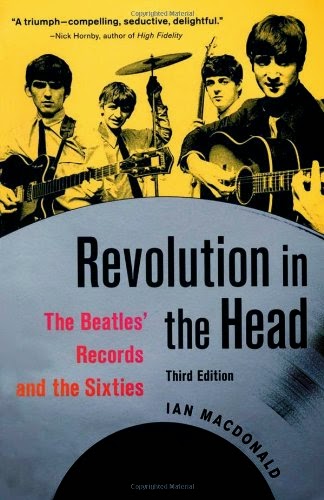
The Beatles - Revolution in the Head: The Beatles Records and the Sixties 3rd edition (2007)


In terms of popular music literature, I would hazard a guess that The Beatles have probably had more written on them than any other musician, despite the fact that most of that literature is sub-standard, lacking in quality and even in some cases factual information. This is definitely not the case with Ian McDonald’s book Revolution in the Head: The Beatles Records and the Sixties, which to my eyes is the most complete analysis of The Beatles and their music I have ever read.

Ian McDonald was a British music critic and author whom sadly passed away in 2003. But he has left a brilliantly researched and well written sociological and musicological Beatles bible. “Revolution in the Head” details every song the band recorded together in chronological order from 1961 to the reunion session sin 1995, describing in detail the music itself, the context behind it, the lyrics, and for some individual songs a complete backstory contextualising that song with the personal life of the writer and the cultural context of the time. Each entry is also accompanied by a list of the musicians who played on each song and how they contributed musically to that track, which in itself offers a very good insight into the way the band operated in the studio and also how multi-skilled they were at moving between different instruments. McDonald’s analysis and opinion of each song is very forthright and this book is certainly no Beatles love-in by any means, thank god, as often Beatles literature is reduced to nothing but praise for their achievements without considering their lesser moments both musically and personally. His musicological and sociological commentary is highly critical and he is not afraid to come out strongly against the songs themselves, the cultural climate of the 60s and even the band members and their personal misgivings while in the band. This makes “Revolution in the Head a refreshingly interesting, informative and un-biased read.

Aside from the main body of the book which contains the analysis of the music, the book also begins with an interesting essay titled “Fabled Foursome, Disappearing Decade”, an essay where McDonald offers an analysis of the major social and cultural changes of the 60s and the decade’s legacy thereafter in the 1970s and 80s. Here McDonald’s argument is that the Beatles represented a meeting point of three cultural trends which were crucial to the 1960s period, materialistic individualism, the radicalism of the new left, and the psychedelic pacifism of the hippy movement. McDonald then reaches the conclusion that the 60s as a whole had little in the way of a long-lasting influence on mainstream society, something which you can kind of see when you look at what followed during the me-decades of the 70s and 80s.


In conclusion, McDonald does a good job in placing the Beatles and their music within the context of the time, giving the songs some cultural and social meaning, especially their later more experimental work. I am also glad he avoided going down the line of attempting to interpret hidden meaning behind their lyrics and investigate potential hidden messages as many have made a life-time obsession out of, as this would only have served to distract from what is a very detailed and thoroughly researched analysis. If ever there was a book which highlighted how this band’s journey was a long and winding road both musically in terms of style and culturally it is this one. McDonald gives the Beatles story an honest and rigorous assessment, with no pre-conceived fandom encroaching on the story and the overall content. A must read for any music fan and also those interested in musicology and 60s-70s sociology. 

A+

- Sam